















Vexply glossary
The terms used in Vexply’s games, guides and articles, explained in a few words. Each one links to the game it belongs to and, when there is one, to the article that explains it in depth.
- 1-2-1 pattern
- The numbers 1, 2 and 1 in a row against a wall of covered cells: the mines are opposite the two 1s and the cell opposite the 2 is safe.
- Best of 3 / best of 5
- A series between two players that ends when one wins the majority: two wins out of three or three out of five. On Vexply you play it from Party, with one game or several.
- Build
- The set of relics, gear and skills that reinforce each other in a run. In Gloamreach loot leans towards the tags you already carry, so a build comes from picking a direction early.
- Candidate (note)
- A number that could still go in an empty Sudoku cell. Candidates are pencilled in small inside the cell and crossed off as numbers are placed in its row, column and box.
- Castling
- A special move of the king and a rook: the king moves two squares towards the rook and the rook jumps to its other side. Only if neither has moved, nothing stands between them and the king is not in, through or into check.
- Challenge code
- A short code like VEX-8F4K2QX that holds a whole challenge: game, setup, goal and, when needed, the deal. Whoever opens it plays exactly the same, with no server.
- Check
- A king is in check when an enemy piece attacks it. The player in check must get out of it on their move: move the king, capture the attacker or block the line.
- Checkmate
- A check there is no way out of. It ends the game and the player who gives it wins; the king is never actually captured.
- Chinchón
- All seven cards in a single run of the same suit. Whoever gets it wins the game on the spot, whatever the score.
- Chording
- Clicking a number that already has all its flags to open all its unflagged neighbors at once. A big time saver, but a wrong flag makes it open a mine.
- Closing (and −10)
- In Chinchón, ending the round by laying down a card when your loose cards add up to 5 points or fewer. Closing with no loose cards takes 10 points off your score.
- Corner strategy
- Keeping the highest tile fixed in one corner and lining the others up beside it in a staircase, avoiding the direction that would pull it out.
- Daily challenge
- A new challenge every day, the same for everyone on the same date, generated automatically from the games in the catalog. Completing it earns extra XP.
- Decoy letters
- Filler letters in a word search that repeat the start of a listed word to mislead you. In Vexply they appear on the Expert level.
- Discovered attack
- Moving one piece opens the line of another piece of yours behind it, which now attacks. If the piece behind gives check, it’s a discovered check.
- Draw
- A game nobody wins. In chess it comes from stalemate, threefold repetition, the fifty-move rule, insufficient material or agreement; in Tic Tac Toe, when the board fills with no line; in checkers, after 40 moves each without a capture or a man moving, or by threefold repetition.
- Draw 3
- The Solitaire mode where the stock turns three cards at a time and only the top one can be played. Harder than Draw 1, because many cards stay buried.
- En passant
- When a pawn advances two squares and lands beside an enemy pawn, that pawn may capture it as if it had moved only one, but only on the very next move.
- Envido
- In Truco, the call on the value of your two cards of the same suit: 20 plus both cards (face cards count 0). Without two of a suit, it’s your highest card. It can only be called during the first trick.
- Escoba (sweep)
- In Escoba, taking every card on the table with a play that adds up to 15. Each sweep is worth a point at the end of the round.
- Flag
- A mark on a covered cell you know holds a mine. The mine counter subtracts flags placed; you don’t need to flag every mine to win.
- Forced capture
- A checkers rule: if any of your pieces can capture, you must capture. Under English rules you choose which capture to make, but the one you choose is completed to the last jump.
- Fork (double attack)
- One move that threatens two things at once, so the opponent can only save one. In chess the knight is the specialist; in Tic Tac Toe it means setting up two lines of two at the same time.
- Foundation
- The four piles, one per suit, where cards are built from Ace to King. You win when all 52 cards are on the foundations.
- King (crowning)
- A checkers man that reached the far row and was crowned: from then on it can move and capture backwards too. Under English rules it moves one square at a time.
- Mastery
- How well you know a game, from Novice to Master, worked out from your achievements, finished games and records in this browser.
- Merge
- When two equal tiles collide as you slide, they join into one worth double, and that value goes to your score. Each tile merges at most once per move.
- Naked pair
- Two cells in the same row, column or box with exactly the same two candidates. Those two numbers are shared between them and can be removed from the rest of the line.
- Nordic cross
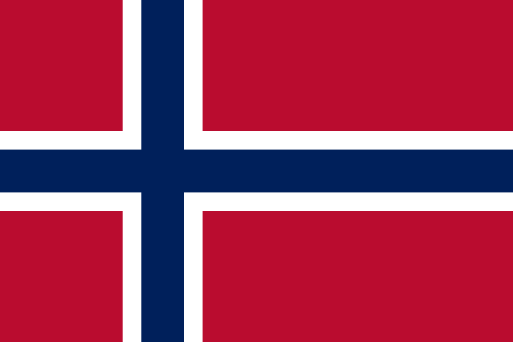
- A cross shifted towards the flagpole, shared by the flags of Denmark, Sweden, Norway, Finland and Iceland. The colours tell them apart.
- Opposition
- In endgames, two kings facing each other with one square between them. The side not to move “has the opposition” and forces the other king to give way.
- Personal best
- Your best result in a game (score, time or moves, depending on the game). Vexply keeps it in your browser only and tells you when you beat it or come close.
- Pin
- A piece can’t move (or shouldn’t) because it would expose a more valuable piece behind it on the same line. If the king is behind it, moving it is simply illegal.
- Promotion
- A pawn that reaches the last rank becomes a queen, rook, bishop or knight, as the player chooses. Almost always a queen.
- Roguelite
- A game of short runs through randomly generated dungeons where dying ends the run but something carries over between runs: in Gloamreach, the embers that pay for camp upgrades, the quests and the Codex.
- Safe first click
- In Vexply’s Minesweeper the first click is never a mine and always opens a clear area, so there’s somewhere to start deducing from.
- Seed
- A number that decides everything random in a game. With the same seed the dungeon (or the deal) is identical: that’s how the Daily Dungeon and challenge codes work.
- Shot
- In checkers, giving up a piece on purpose so that your opponent, forced to capture, ends up losing more pieces. The most common is the two-for-one.
- Skewer
- The reverse of a pin: a valuable piece is attacked and, when it steps aside, exposes another piece behind it on the same line.
- Stalemate
- The player to move is not in check but has no legal move. The game is a draw, however far ahead the other player is.
- Stock and waste
- The cards not dealt to the columns. They are turned from the stock to the waste, one or three at a time depending on the mode, and only the top waste card can be played.
- Streak
- Days in a row on which you played at least one game that counts. Also used for correct answers in a row in Geography, which earn extra points.
- Tableau
- The seven columns of Solitaire. Cards stack in descending order with alternating colours, and only a King can go into an empty column.
- Telegraph
- The warning an enemy gives before it strikes: a flash, a line or an area painted on the floor. In Gloamreach every attack is telegraphed, and that is the moment to dash.
- Truco, retruco and vale cuatro
- The calls that raise what a hand is worth: truco (2 points), retruco (3) and vale cuatro (4). The rival can accept, raise or refuse, in which case the caller takes the previous value.
- X-Wing
- An advanced Sudoku technique: if in two rows a number can only go in the same two columns, it takes two opposite corners of that rectangle and can be removed from the other cells of both columns.
- Zugzwang
- A position where any move makes things worse for the player to move: they would rather pass, but in chess you can’t.